
JPMorgan’s Bitcoin Forecast: 10% Annual Returns Over 10 Years
Understanding JPMorgan’s Historic Bitcoin Forecast
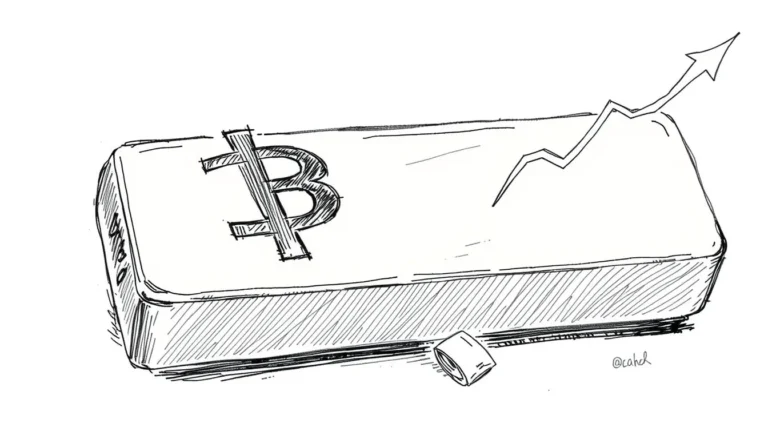
JPMorgan Asset Management has taken a significant step by publishing its first-ever ten-year bitcoin forecast, projecting a 10% compounded annual return with 55% volatility. This milestone appears in the firm’s 31st annual Long-Term Capital Market Assumptions report, a document that shapes how institutional investors think about asset performance across the coming decade. The inclusion of bitcoin in this prestigious forecast signals a fundamental shift in how major financial institutions view cryptocurrency. For context, JPMorgan simultaneously projects 5.5% annual returns for Gold investment, the traditional store of value that has historically served as a hedge against inflation and market uncertainty. This comparison is particularly revealing: bitcoin’s projected return is nearly double that of gold, suggesting institutional confidence in digital assets’ growth potential. However, JPMorgan’s analysts were transparent about limitations. Bitcoin hasn’t yet been integrated into the firm’s main covariance matrix—the statistical framework measuring how different assets move together. Instead, analysts built a separate, smaller model specifically for bitcoin, acknowledging that its behavior remains somewhat unpredictable relative to traditional assets. This cautious approach reflects the ongoing evolution of cryptocurrency markets and their integration into mainstream finance.
Key Benefits and Risks: What Investors Should Know
The 10% projected return on crypto investment represents an attractive proposition, particularly when compared to traditional bond yields and moderate stock market expectations. However, the accompanying 55% volatility estimate—a measure of price fluctuation—deserves serious attention. This volatility means bitcoin’s value could swing dramatically year to year, which some investors view as opportunity and others as unacceptable risk. JPMorgan identifies several positive developments supporting inclusion of bitcoin in portfolios: improving regulatory clarity, expanding institutional infrastructure including spot ETFs and custody solutions, growing liquidity in crypto markets, and better price discovery mechanisms. The asset manager notes that roughly $50 billion flowed into digital assets during 2026 alone, reflecting genuine institutional adoption. However, challenges remain. Bitcoin’s correlations with other assets remain unstable, meaning it doesn’t consistently move with or against stocks and bonds in predictable ways. This unpredictability complicates portfolio construction and risk management. Industry experts have pushed back on specific assumptions—Bitwise’s chief investment officer argued the 55% volatility estimate is too conservative, suggesting bitcoin’s volatility has declined over the past fifteen years. Understanding these nuances helps investors make informed decisions about whether crypto investment aligns with their risk tolerance and investment timeline.
Practical Takeaways and Portfolio Considerations
For investors considering crypto investment or gold investment allocations, JPMorgan’s forecast offers actionable insights. First, the projection suggests bitcoin could outperform traditional assets over the next decade, but this outcome depends on technological development, regulatory stability, and market infrastructure continuing to improve. Second, the 55% volatility indicates bitcoin belongs in conservative portfolios only as a small position. Financial advisors typically recommend limiting any single volatile asset to 5-10% of a portfolio, especially for investors nearing retirement. Third, institutional infrastructure has matured considerably. Investors can now gain bitcoin exposure through multiple channels: spot ETFs like BlackRock’s IBIT (which attracted $665 million in a single day’s inflows), futures contracts, direct holdings, or cryptocurrency-focused companies. Each option carries different tax implications and custody considerations worth evaluating with a financial advisor. Fourth, JPMorgan’s willingness to publish this forecast suggests confidence that bitcoin will eventually be integrated into standard portfolio frameworks as volatility declines and correlations stabilize. This indicates a realistic multi-year or multi-decade adoption timeline. Finally, consider bitcoin’s relationship to gold investment. Rather than viewing them as direct competitors, sophisticated investors increasingly see them as complementary holdings serving different roles: gold as a stability anchor and bitcoin as a growth-oriented alternative asset. Starting with small positions and understanding your personal risk tolerance remains essential before committing significant capital to any volatile asset class.
Market Momentum and Institutional Validation
JPMorgan’s forecast doesn’t exist in isolation—it reflects a broader institutional awakening to cryptocurrency’s role in modern portfolios. The timing is significant. Earlier in 2026, the asset manager noted that $50 billion had already flowed into digital assets, indicating genuine capital allocation decisions rather than mere speculation. The launch and performance of spot bitcoin ETFs demonstrates this shift most clearly. BlackRock’s IBIT fund, which offers straightforward bitcoin exposure through traditional brokerage accounts, achieved its largest single-day inflow since October 2025 around the time of JPMorgan’s announcement. This suggests retail and institutional investors alike are responding to increased legitimacy signals from major financial institutions. JPMorgan’s co-authors, Dr. Sheena Shah and Dennis Cristallo, emphasized how cryptocurrency infrastructure now resembles traditional finance. Investors have access to exchange-traded funds, derivatives markets, bank-grade custody, and financing options—the same toolkit available for stocks and bonds. This infrastructure maturation reduces friction and risk, making crypto investment more accessible and professionally manageable. The broader crypto ecosystem—now comprising over 60 million coins and tokens—depends on bitcoin as its anchor, providing security through its longer track record and transactional reliability. JPMorgan’s forecast effectively validates cryptocurrency’s trajectory from speculative fringe asset to mainstream investment category. While skeptics remain, and the asset class requires continued regulatory clarity and technological development, the momentum among sophisticated investors appears genuine and growing. This context helps explain why JPMorgan’s 10% projection—seemingly modest compared to some historical cryptocurrency gains—actually represents a significant institutional endorsement.
Making Your Investment Decision
JPMorgan’s forecast provides valuable context, but individual investment decisions require personal financial assessment. Start by honestly evaluating your risk tolerance. Can you emotionally and financially withstand a 55% drawdown without panic-selling? Bitcoin’s volatility means experiencing such declines is a realistic possibility. Next, consider your investment timeline. The 10% projected return assumes a full decade holding period. Shorter timeframes introduce additional uncertainty—bitcoin could easily experience three-year periods of negative returns despite long-term bullish forecasts. Examine your existing portfolio composition. If you already hold diversified stocks, bonds, and gold investment, adding 5% bitcoin exposure diversifies further. If your portfolio already includes alternative assets or you’re significantly underweighted in traditional investments, prioritizing stock and bond allocation may make more sense. Evaluate available vehicles for bitcoin exposure. Spot ETFs offer simplicity and tax efficiency for many investors. Futures contracts suit active traders. Direct bitcoin holdings require self-education on secure storage and custody. Publicly traded cryptocurrency companies provide indirect exposure. Each has different cost structures, tax implications, and security considerations. Finally, distinguish between conviction and speculation. JPMorgan’s forecast is one institutional perspective, valuable but not infallible. Crypto markets remain evolving, regulatory environments change, and technology faces unpredictable challenges. Make allocation decisions you can maintain through market cycles without second-guessing. Consider consulting a financial advisor familiar with crypto investment to ensure any allocation aligns with your complete financial picture, goals, and risk capacity.
Source: JPMorgan Issues First 10-Year Bitcoin Forecast, Projects 10% Annual Return