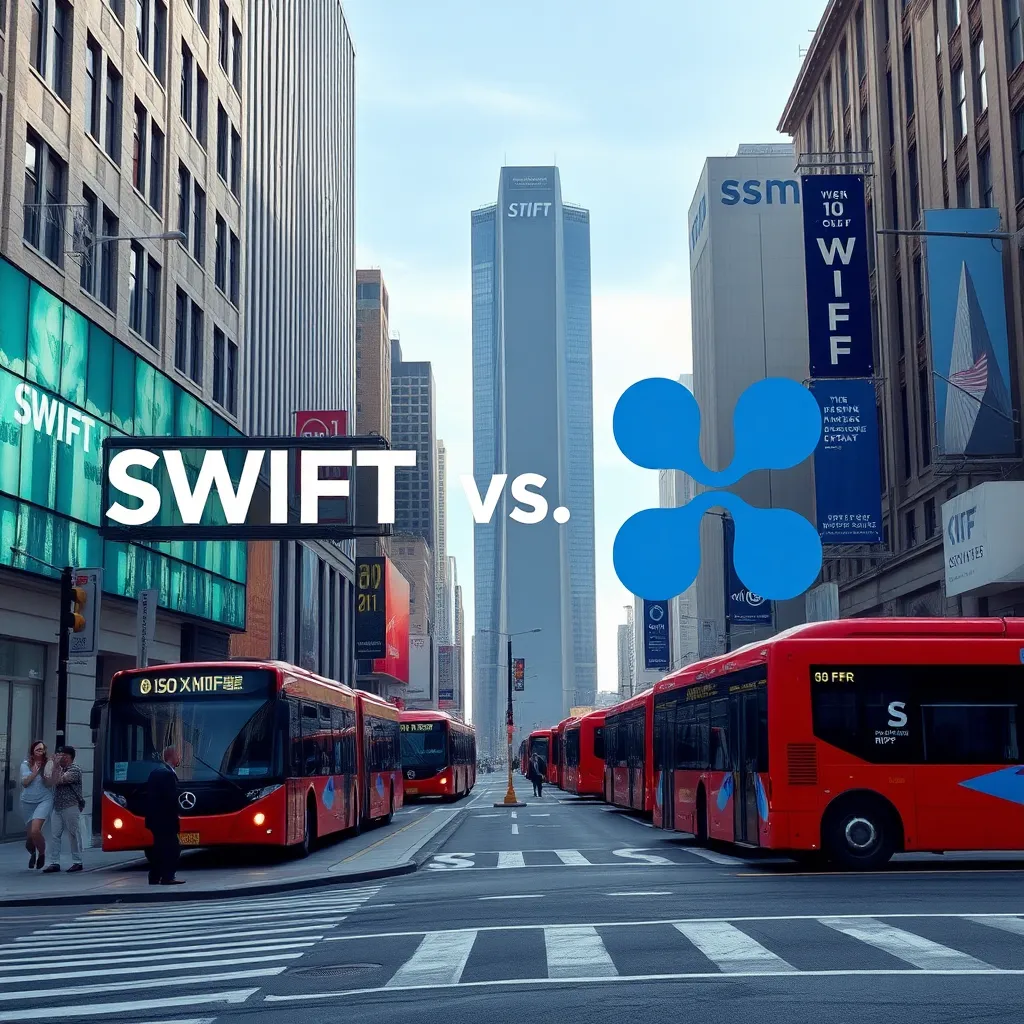
SWIFT vs. Ripple: ISO 20022 and the Future of Payments
SWIFT’s recent announcement regarding the adoption of the ISO 20022 standard and blockchain integration positions it as a significant competitor to Ripple. This move allows SWIFT to enhance its payment services by offering banks value-added products and services, improving interoperability with various networks, rails, and third parties. A key aspect is SWIFT’s decision against creating its own token, unlike Ripple’s XRP, suggesting a focus on interoperability rather than direct competition. This strategy aims to connect with any crypto network through a single framework, contrasting with Ripple’s reliance on XRPL and XRP. Meanwhile, Ripple is actively pursuing interoperability through initiatives like its acquisition of Rail, a stablecoin platform supporting multiple payment rails and layer-1 networks, including plans to integrate with the XRP Ledger. Ripple’s RLUSD stablecoin, deployed on Ethereum and with plans for Cardano integration, further emphasizes this interoperability strategy. The competition highlights the evolving landscape of global payments, with both SWIFT and Ripple focusing on connecting diverse networks and rails.